
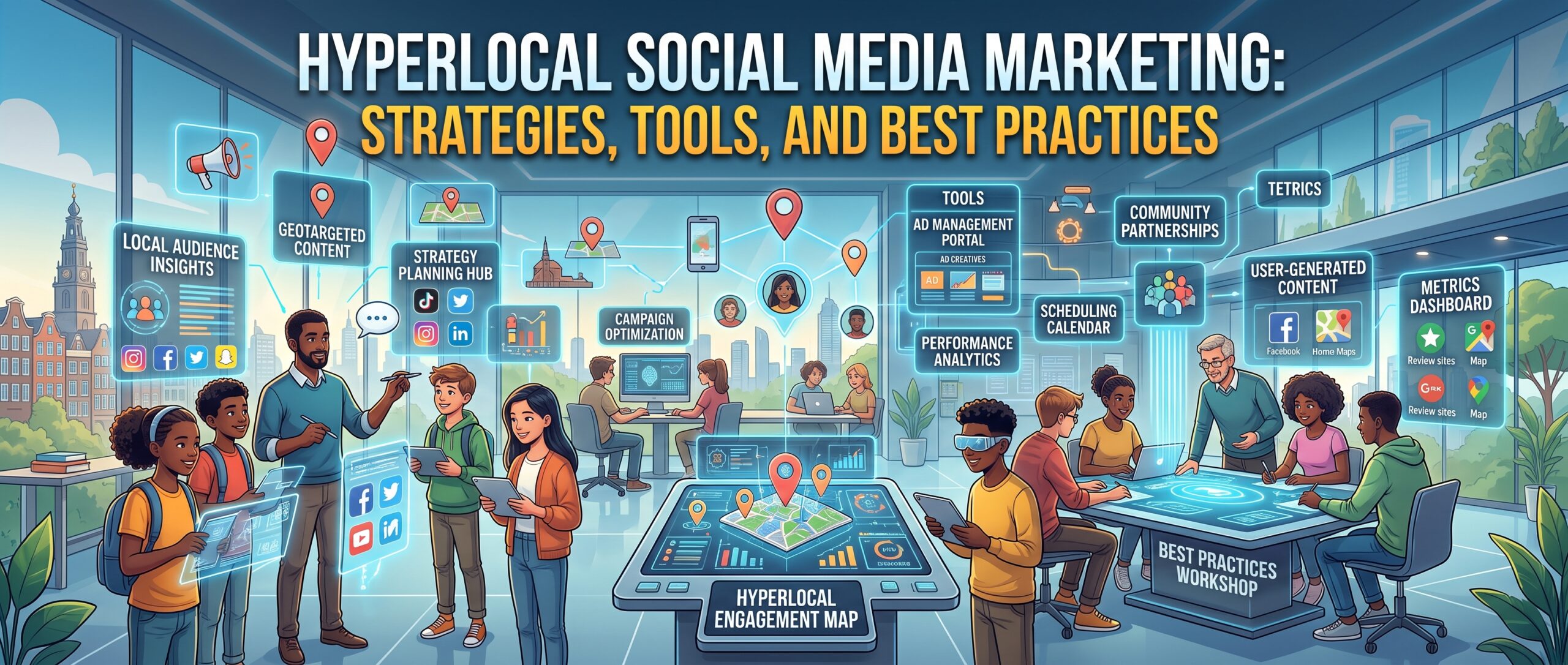
What is Hyperlocal Social Media Marketing?
Hyperlocal social media marketing refers to a targeted social media strategy that focuses marketing efforts on a well-defined geographic area, typically a specific neighborhood, city, or region. The goal is to connect with local customers, drive engagement and participation on social media, and increase sales by leveraging various social platforms.
Unlike regular social media marketing which casts a wider net, hyperlocal social media marketing allows businesses to zero in on a particular location-based target market. This localized approach enables brands to build deeper relationships within local communities.
Benefits of Hyperlocal Social Media Marketing
Adopting a hyperlocal social media marketing strategy offers numerous advantages, especially for small businesses looking to boost their presence within a city or defined area.
Enhanced Customer Engagement
Hyperlocal social media marketing facilitates more meaningful engagement with customers. By highlighting local landmarks, businesses, events, and community partnerships, brands can better resonate with the local audience and foster customer relationships.
According to Sprout Social, 43% of marketers planned to increase their investment in Instagram in 2023, highlighting the platform’s continued relevance and potential for hyperlocal marketing strategies.
Improved Local Reputation
Supporting local events and initiatives through social media helps boost visibility and reputation within the community. Encouraging user-generated content also adds authenticity.
User-generated content such as local customer reviews, photos, and testimonials enhances credibility and reputation within a targeted area. This type of content leads to higher engagement and trust from the local community (Business2Community).
Increased Sales and Conversions
Hyperlocal campaigns that highlight special in-store promotions or discounts for local social media followers can drive foot traffic.
Creating geographic-specific promotions tailored to local preferences also boosts engagement and conversions. Examples include time-limited offers during local events or holidays.
Advantages for Small Businesses
Small businesses with limited marketing budgets can maximize reach by geo-targeting their social media content to a specific radius. Specialized targeting features on platforms like Facebook and Instagram make this achievable without significant ad spend.
Hyperlocal social media marketing also facilitates partnerships with local influencers who have an established regional follower base. According to SmartSites, partnering with local influencers can amplify a brand’s reach and visibility.
Understanding Hyperlocal Social Media Marketing
To deploy an effective hyperlocal social media strategy, it’s important to first understand what differentiates it from regular social media marketing.
What is Hyperlocal Social Media Marketing?
Hyperlocal social media marketing aims to reach and resonate with customers in a well-defined and concentrated geographic area, typically within a 5-10 mile radius. Everything from the content and imaging to the promotions and partnerships is localized and personalized to the target location.
Defining Hyperlocal Marketing
Hyperlocal marketing is a targeted strategy that focuses on engaging consumers within a specific neighborhood, zip code or city. It could involve marketing to customers located within a 1-2 mile radius in an urban area.
In contrast, local marketing casts a wider net and targets broader city, DMA or state regions. While a pizza shop adopting local marketing strategies may target customers across New York City, a hyperlocal approach would focus its efforts specifically on neighborhoods in Brooklyn.
Some key characteristics of hyperlocal marketing:
- Concentrated geographic focus
- Tailored content and messaging for the local audience
- Community-building by supporting local events/causes
- Targeted ad campaigns and promotions
- Partnerships with neighborhood businesses and influencers
Differences Between Local and Hyperlocal Marketing
| Local Marketing | Hyperlocal Marketing |
|---|---|
| Targets a metropolitan area or region | Targets a well-defined small geographic area |
| Wider reach and broader messaging | Narrow reach but deeper engagement |
| City/County level targeting | Neighborhood or zip code level targeting |
| Generalized messaging and offers | Personalized and exclusive local offers |
| Builds regional presence and awareness | Cultivates community belonging and loyalty |
Importance of Hyperlocal Marketing
Targeting such narrow geographies may seem niche, but hyperlocal marketing serves some crucial needs. Building deep community ties cultivates loyalty among customers who take pride in supporting homegrown businesses. According to Prism ME, hyperlocal efforts significantly boost local community engagement as well.
For multi-location brands, hyperlocal strategies also help optimize messaging and promotions for each distinct market. This localization and personalization in marketing has become increasingly important over the years.
Why Hyperlocal Social Media Marketing Matters
Though still an evolving concept, hyperlocal social media marketing is increasingly being embraced by major brands and small businesses alike.
Statistics and Facts
As consumers connect more with their local communities, hyperlocal marketing provides an opportunity to tap into that sentiment.
Some notable statistics that highlight the promise of hyperlocalized social media marketing:
- Growing Investment in Social Media: In 2023, 43% of marketers planned to increase their investment in Instagram, highlighting the platform’s continued relevance and potential for local marketing strategies (Sprout Social).
- Local Community Building: Hyperlocal social media marketing significantly boosts local community engagement. For instance, collaborating with local businesses and participating in community events fosters a sense of community and brand loyalty (Prism ME).
- User-Generated Content: Encouraging user-generated content such as reviews, photos, and testimonials can enhance credibility and reputation within a local area. This type of content can lead to higher engagement and trust from the local community (Business2Community).
- Influencer Partnerships: Partnering with local influencers can amplify a brand’s reach and add authenticity to the marketing efforts. Local influencers often have a loyal following that can be effectively leveraged for hyperlocal marketing (SmartSites).
- Geographic-Specific Promotions: Creating geographic-specific promotions tailored to local preferences can drive significant engagement. Examples include time-limited offers during local events or holidays, and exclusive in-store promotions for social media followers (TB Media).
- Regional Hashtags: Using area-specific hashtags helps in reaching a targeted audience efficiently. This practice not only increases visibility but also connects the brand to relevant local conversations and events (TB Media).
- Engagement Metrics: Monitoring and measuring the results of hyperlocal social media efforts is crucial. Key metrics include engagement rates, reach, and conversion rates, which help in refining strategies for better effectiveness (SmartSites).
- Smartphone Usage: As of Q2 2023, 97.4% of working-age internet users own a smartphone, making mobile optimization a critical factor in hyperlocal social media marketing strategies (Influencer Marketing Hub).
The data clearly shows that hyperlocal social marketing provides tangible benefits, making it a smart strategy for brands to embrace.
Benefits for Local Businesses
Adopting hyperlocal social media marketing strategies provides unique advantages to local businesses looking to deeply engage customers within their communities.
- It allows localized and personalized marketing approaches based on an understanding of local preferences and trends.
- With selective targeting and exclusive offers, hyperlocal campaigns can effectively drive sales and conversion rates.
- The highly targeted nature facilitates strong connections with the local community, fostering brand loyalty and improving customer retention.
For small businesses, hyperlocal marketing also evens the playing field to effectively compete with bigger brands. The focused audience targeting provides a cost-efficient way to reach their best customers.
Who Should Use Hyperlocal Social Media Marketing?
Virtually any business with a physical offline presence can benefit from incorporating hyperlocal marketing tactics on social media:
Types of Businesses and Organizations
Hyperlocal social media marketing is highly effective for certain categories of businesses and organizations:
- Local Shops and Boutiques: Cafes, salons, boutiques, bookstores, etc. can build community and drive sales through hyperlocal campaigns.
- Restaurants and Bakeries: Cafes, bakeries, and restaurants can boost engagement and orders with campaigns targeted to neighborhoods.
- Gyms and Fitness Studios: Local fitness centers and gyms can attract new members through hyperlocal strategies.
- Schools and Community Centers: Schools, libraries, and community centers benefit from connecting with locals on social media.
- Nonprofits and Charities: Nonprofits can raise awareness of causes and increase local donations with hyperlocal messaging.
- Local Events and Festivals: Local events and festivals can promote attendance by targeting nearby residents on social media.
- Real Estate Agents: Real estate professionals can effectively market listings and connect with buyers through hyperlocal outreach.
- Home and Automotive Services: Plumbers, mechanics, cleaners, etc. gain an advantage by focusing efforts on surrounding areas.
The key is identifying businesses that rely heavily on local customers within a small geographic radius. These organizations will see the biggest return from hyperlocal campaigns.
Industries That Benefit
Hyperlocal social media marketing is hugely impactful for location-based businesses providing frequent or habitual services to customers within a defined trade area.
Some examples include:
Retail Industry – Grocery stores, pharmacies, gas stations, clothing boutiques
Food & Beverage – Restaurants, cafes, bars, bakeries, butchers, specialty food producers
Health and Wellness – Yoga studios, gyms, salons/barbershops, chiropractors
Professional Services – Law firms, dentist offices, accounting services
Home and Auto – Landscapers, electricians, mechanics, home cleaning services
Case Studies: Successful Hyperlocal Campaigns
Let’s look at some real-world examples of brands running successful hyperlocal social media marketing campaigns.
The Bouqs Company (Flower Delivery)
The Bouqs Co. ran a targeted Instagram campaign focused on moms in Chicago. They partnered with 15 local mom bloggers and influencers by sending each a customized flower delivery.
The influencers then posted user-generated content of their flowers on Instagram. Using local hashtags drove 760% more traffic by moms 25-54 years old in Chicago.
Sprouts Farmers Market (Grocery Store)
Sprouts Farmers Markets leverages Instagram to promote new store launches by partnering with local influencers. When opening in San Jose, California, they worked with 19 area influencers to drive pre-launch engagement.
In just one day, the #SproutsSanJose campaign generated over 34,700 impressions on Instagram. The hyperlocal influencer initiative was key in fueling store awareness and buzz before opening.
As these examples showcase, a diversity of businesses have leveraged hyperlocal social media marketing strategies to drive impressive results.
Now let’s transition to exploring the key elements of building an effective hyperlocal strategy.
Key Components of a Hyperlocal Social Media Strategy
Crafting an impactful hyperlocal social media strategy entails some crucial elements.
Audience Research and Segmentation
Gaining crystal clarity around your target demographic and their preferences is foundational. While casting a wide net may generate vanity metrics like reach and impressions, conversion rates are proven higher with selective and definitive audience targeting.
Start by researching the local audience and personas in your defined trade area. Identify which social platforms they are most active on. Then leverage lookalike audiences to selectively target the highest potential customer profiles within your geo-fence.
Content Creation and Curation
The next step is crafting compelling social content tailored to the preferences and interests of your well-defined audience. From localized messaging to hashtag campaigns support local events, ensure your content aligns with the local vibe and culture.
Encourage audiences to co-create content as well, via reviews, user-generated photos and videos, check-ins, etc. This builds authentic community connections.
Monitoring and Analytics
Keep a pulse on campaign performance through key hyperlocal metrics like engagement rate, clicks, traffic, and online/offline conversions. Many social media and analytics tools provide geographic and location-based reports to help track effectiveness within target regions.
For instance, Instagram Insights displays content performance by city while Google Analytics can track actions by users’ location. Leverage these insights to refine your hyperlocal targeting and content strategy.
Platforms for Hyperlocal Social Media Marketing
While the biggest social media sites have built-in functionalities to target by location, some dedicated hyperlocal platforms provide enhanced tools as well.
Here’s an overview of relevant social platforms:
With location targeting options and geo-fencing, Facebook enables reaching audiences within a 1-mile radius or by specific neighborhoods. Scheduling ads also allows timing delivery around local events when specific audiences are active.
Facebook Events is another feature to drive local turnout and engagement. Users can discover events nearby, interact with those attending, and coordinate with friends.
Facebook Groups centered around local communities facilitate connections as well. For instance, neighborhood-specific groups enable crowdsourcing recommendations, classified listings, connecting with leaders, and monitoring real-time local chatter.
From geotagged posts to Stories heatmaps, Instagram provides built-in hyperlocal functionality. Businesses can add location stickers when posting or go live at their brick-and-mortar venue. Visitor posts are visible on the Related Locations section – trackable via the location analytics dashboard.
Paid tools like Promoted Posts have precise radius targeting too – advertisers can hone in on users within one mile of chosen locations.
Additionally, Instagram influencers often have ultra-targeted regional appeal. Identifying and partnering with neighborhood-specific influencers who have high local authority provides credibility.
Though Twitter focuses less on locations, certain tactics can effectively localize Twitter marketing:
- Localized Bios/Profiles – Include the city or neighborhood in descriptions. Local businesses can optimize profiles for enhanced visibility in Google My Business listings too.
- Geotagged Tweets – Calling out local events, news or weather drives contextually relevant engagement from the local Twitterati.
- Localized Hashtags – Hashtag campaigns can highlight happenings, like using #DineOutDenver to promote specials. Track campaign-specific tags to gauge hyperlocal resonance and reach.
- @Mentioning – Community groups, influencers and partners on Twitter spreads visibility virally on the platform.
While Twitter doesn’t enable granular location-based targeting of paid ads, tailored local hashtags and partnerships organically reach key audiences.
Best Practices by Platform
Here are some top tips for executing hyperlocal campaigns on key platforms:
- Target by location (city, zip code, radius) and local interests.
- Create geo-fenced campaigns around physical stores.
- Promote local events, offerings, and partnerships.
- Retarget website visitors by geography.
- Use geo-tagged posts and local hashtags.
- Partner with local influencers on sponsored content.
- Promote “Stories” content at local events and locations.
- Enable location-based Stories stickers and filters.
- Monitor local hashtags and trending topics.
- Tweet real-time at local events happening now.
- Curate local “Moments” around holidays, events, etc.
- Partner with local influencers and personalities.
Nextdoor
- Introduce your business through a neighborhood post.
- Offer discounts for local customers and followers.
- Post unique value-add content like local tips, behind-the-scenes.
- Monitor conversations relevant to your business.
TikTok
- Create challenge campaigns related to your local area.
- Make short-form entertaining content with Location stickers.
- Partner with local TikTok creators.
- Use hashtags and songs trending locally.
By tailoring content and tactics to each platform, brands can maximize hyperlocal engagement.
Strategies for Effective Hyperlocal Social Media Marketing
Now let’s explore some proven strategies and best practices for deploying a high-impact hyperlocal social strategy.
Crafting a Hyperlocal Strategy
Success begins with laying the strategic foundation – identifying geographic and audience focus areas for your campaigns and content.
Defining Your Target Area
Determine which neighborhoods and zip codes comprise your core customer base and priority geographic targets. Outline this region on a map as your primary geo-fence for social media initiatives.
Depending on your business type, this hyperlocal target zone could span a few city blocks for retailers, under 5 miles for coffee shops/restaurants, 10 miles for service-area dependent businesses etc. Clearly defining your hyperlocal area of focus is step one.
Choosing the Right Platforms
Identify which social platforms resonate best with your geographic and demographic targets. While Facebook and Instagram provide extensive hyperlocal ad targeting, also explore emerging channels favored by your audience. For instance, TikTok and NextDoor may better reach certain age brackets. Tools like Socialinsider can assess audience overlap across platforms – guiding optimal channel selection.
Once you determine which sites to prioritize, utilize the advanced location-based ad targeting features available. Each network offers customizable options to narrow reach using radius, zip codes, geofences, interests plus demographics. Tailor campaigns accordingly.
Creating Engaging Hyperlocal Content
Now to connect with these hyper-targeted groups, provide value and cultivate community with localized social content.
Content Tailoring
Craft content that resonates with the city’s culture, speaking to what locals care about. Identifying the right mix of entertainment, lifestyle and local business news content that engages the target demographic is key.
Hashtags should tap into trends and events distinctive to the area – like restaurant weeks or festivals. Similarly, visuals should capture iconic locations and known personalities the audience connects with.
User-Generated Content
While creating shareworthy photo and video content is table stakes, also encourage audiences to co-create it with you. From reviews to check-ins and photos, user-generated content (UGC) adds authenticity. It also spreads reach as happy customers promote you to their personal networks.
Incentivize check-ins, shares and tags with special loyalty perks or badges. Also repost UGC from locals highlighting favorite products or store moments – crediting them drives engagement. According to Business2Community, UGC can enhance trust and reputation locally.
Leveraging Local Influencers and Partnerships
Beyond owned and earned content, generating buzz through shared and paid opportunities complements hyperlocal strategies by expanding reach.
Local Influencer Collaborations
Identify the microinfluencers, bloggers and personalities who dominate conversations in the target geography. Reaching out for partnerships lends third-party credibility and taps into their captive hyperlocal audience. Ensure collabs resonate via co-created contextually relevant and location-focused content.
According to SmartSites, partnering with hyperlocal influencers amplifies branded reach while adding authenticity. Pay attention to content performance indicators like engagement and clicks to optimize creator relationships.
Cross-Promotions with Local Businesses
Similarly, collaborating with neighborhood establishments offers mutual marketing benefits and community goodwill. Such joint promotions often deliver well as audiences perceive them as insider tips from trusted local brands.
For example, partnering with the trendiest local cafe to co-promote a themed Happy Hour event, or coordinating a mini-neighborhood restaurant crawl are great community-led concepts.
Tools and Techniques for Hyperlocal Social Media Marketing
Specialized tools and analytics provide additional means to optimize hyperlocal campaigns on social platforms.
Utilizing Advanced Analytics and Measurement Tools
Complement platforms’ built-in analytics with third-party solutions for deeper insights into hyperlocal content resonance and performance.
Google Analytics and Facebook Insights
Both Google Analytics and Facebook offer location reports – showing engagement metrics by target regions – cities, countries etc. Though not zip code-specific, directionally these help gauge local vs wider performance.
Specialized Hyperlocal Analytics Platforms
Vendors like Socialinsider enable filtering analytics by location radius – tracking how different neighborhoods responded. Such hyper-granular metrics then guide geo-targeting priorities and location-specific content calibrations for better results.
Implementing Hyperlocal SEO Techniques
Driving visibility on search in tandem with social efforts accelerates local discoverability. Optimizing Google My Business listings is vital to enhance local SEO prominence.
Optimizing Google My Business Profiles
Completely filling out and verifying business profiles on Google My Business improves search rankings and helps visibility in Maps too. This drives foot traffic from smartphone searches in the neighborhood.
Local Keyword Targeting and Backlinks
Target locally-searched terms like “Thai food in 63158” with location-optimized landing pages. Earn credibility via contextual local backlinks, say from neighborhood newspaper sites or city guides. Such signals boost relevance for geo-minded queries.
Geo-Targeted Advertising and Promotions
Rounding out your hyperlocal program, tailored advertisements and special offers provide tactical nudges to sales.
Creating Location-Specific Ads
Both Facebook and Instagram enable creating Hyperlocal Ads shown exclusively to audiences within chosen postcodes or cities. Geo-fencing around store locations is another option. Tailoring creatives, deals and messaging for the neighborhood gives contextual relevance.
Localized Offers and Time-Limited Promotions
Special discounts or incentives tied to occasions popular locally encourages social sharing and conversions. For example, exclusive 20% off coupons for the local Music Festival weekend or Latte Happy Hour at 9am before Yoga class. Urgency nudges user action.
How to Implement a Hyperlocal Social Media Marketing Strategy
While earlier sections provided strategic context and creative ideation, this chapter delivers tactical advice on activating hyperlocal social media campaigns:
Identify Your Hyperlocal Target Audience
Using analytical tools and social media audience insights, deeply research consumer behavior patterns and influencer preferences linked to desired neighborhoods or regions. Learn which locations comprise the target geography and profile psychographics of the best-fit personas from each area. This forms the foundation to tailor content accordingly later.
Techniques for Audience Research
Survey customers by zip codes to determine high-density areas. Use tools like Affinio on social channels to classify and geo-locate user segments for advanced persona insights and targeting ideas.
Tools for Segmentation and Analysis
Social media management platforms like Sprout Social provide audience analysis and segmentation by location – enabling export of custom remarketing lists for ads.
Tailor Content Accordingly
Strategically map out localized content across touchpoints – website, blogs, social posts, ad creatives etc. Identify what messaging angles tap into each geo-targets’ culture, current trends, businesses and events they care about. Align visuals and partnerships to match local vibe as well.
Crafting Locally Relevant Content
Curate content around famous landmarks, marquee events/festivals and personalities the local community identifies with.
Types of Content That Resonate with Local Audiences
- Local events, entertainment and lifestyle updates
- Celebrity and influencer news relevant to the area
- Promotions for beloved local businesses
- Posts involving local fan communities and sports teams
- Insider spots for eating, nightlife and shopping
- Support for community initiatives and nonprofits
- User-generated reviews and neighborhood recommendations
- Hyperlocal memes and pop culture references
Use Local Geotags and Hashtags
Strategically tag locations in posts and participate in localized hashtag campaigns to embed your brand into trending topics. This taps into existing conversations instead of interrupting them.
Importance of Geotagging and Hashtagging
Geotags enable visibility when users search for content by locations on social and discovery platforms like Yelp. Hashtags drive participation in viral meme trends happening locally.
Examples of Effective Use
Tagging a Sponsor booth at the Austin City Limits music festival. Using #SXSW2018 to ride the social chatter wave during the event. Adding Geotags promotes discovery by fest attendees nearby.
Engage with Local Influencers
Research popular microinfluencers with predominantly regional appeal and niche hyperlocal authority. Craft partnerships showcasing their neighborhood persona.
Finding and Partnering with Local Influencers
Tap into their cultural capital and grassroots local network for authentic co-marketing campaigns. Compensate accordingly based on true influence scope.
Benefits of Local Influencer Marketing
Neighborhood influencers attract locals craving insider perspectives. Their posts garner higher engagement rates and clicks given contextual relevance. Tying branded assets and products to local personalities that audiences look up to thus lifts campaign results.
Support Local Businesses, Events, and Causes
Proactively participate either as a sponsor or simple social cheerleader for businesses, charitable fundraisers, festivals etc loved by the locals.
Ways to Support Community
- Official sponsorships exchanging promotion at events for brand visibility
- Social media endorsements and resonating visual callouts
- Rallying user-generated event coverage through reposts/shares
Successful Collaborations
- Sponsored school carnivals and fun runs
- Food festival after-parties/brunches
- Fundraiser support and donation drives
- Local restaurant/art weeks
Such community support earns goodwill, facilitating more influencer collaborations and neighborhood events participation.
Encourage User-Generated Content
Prompt customers, fans and employees to submit reviews, event experiences and branded content on social channels. Spotlight user photos and videos showcasing natural moments with your product/store as well.
Strategies to Motivate UGC
- Onsite signage with creative prompts for social posting
- UGC sticker packs to share on Stories
- Contests for best photo, video, review etc.
- Badges, rewards and feature opportunities for top advocates
Benefits and Impact of UGC
User-generated photos and videos appear more authentic. Peer reviews and neighborhood faves often catalyze buying decisions. UGC also spreads organically within customers’ social networks as creators promote their featured content.
Monitor and Respond to Local Feedback
Listen closely to conversations and direct mentions linked to your local community. Track reviews sites like Yelp and Tapinfluence for customer sentiment specifically around neighborhood locations. Engage positively with constructive feedback and feature rave reviews when possible.
Tools and Techniques
Social listening tools like Keyhole provide filters to isolate geo-specific mentions for each location. Assign customer service reps to monitor and directly address incoming local reviews, check-ins, complaints etc.
Case Studies and Real-World Examples
Now let’s explore inspirational examples of successful hyperlocal social media marketing efforts from recognized brands.
Successful Hyperlocal Campaigns
Retail Industry Example
Women’s fashion brand Anthropologie piloted hyperlocal initiatives on Instagram and Snapchat to connect with audiences in Cambridge and Somerville, MA.
They partnered with local artists and boutiques to co-create Geofilters and promote in-store events. Store patrons accessed exclusive Cambridge-themed stickers, filters and content by checking in or sharing on social with the designated geo-tagged location hashtag.
This campaign resulted in 350+ social engagements and 92k+ Snapchat impressions, successfully driving foot traffic and sales at the Cambridge Anthropologie.
Food and Beverage Example
Krispy Kreme targeted neighborhoods around Los Angeles, Miami and NYC to promote their delivery rollout, per Adweek.
Using Foursquare data, they retargeted users near local donut and coffee spots with video ads on YouTube and social. Messaging highlighted Krispy Kreme’s specialty donuts while offering discounts for first-time delivery customers.
In the end, store visits and app downloads for users exposed to the hyper-targeted ads were nearly 2X higher compared to the control groups.
Key Takeaways from Successful Campaigns
Insights from Hyperlocal Social Media Marketing Done Right
- Microtargeting drives conversion lift
- Local partnerships provide credibility
- Co-created events & content lead to higher quality engagement
- Contextual incentives encourage social sharing, app downloads etc. thus boosting organic reach
- Omni-channel approach – coordinate messaging across digital and physical touchpoints for consistency
These examples prove that nuanced hyperlocal strategies tapping into audience insights, partnerships and UGC yield measurable upticks in branded metrics from awareness to sales. Now let’s switch gears to explore legal considerations.
Legal and Ethical Considerations
While running hypertargeted campaigns, certain regulations and transparency practices must be upheld.
Privacy Concerns and Data Protection
As hyperlocal often relies on collecting first-party data or digital tracking to identify nearby users, informed consent and judicious data usage are imperative legally and ethically.
Importance of Transparency
Notify website visitors and app users about location-based tracking implemented and targeting purposes through clear cookie disclosures and privacy policy communication. Always provide opt-out mechanisms and seek permissions before acquisition or sharing of personal data.
Complying with Data Protection Regulations
Stay cognizant of and fully compliant with national and state laws governing consumer data privacy – like GDPR requirements in the EU or CCPA enforced in California. Consult with legal counsel specializing in compliance to institute necessary safeguards in data sourcing/processing.
Ethical Marketing Practices
Additionally, local community expectations typically require even higher standards for corporate responsibility and equitable promotion.
Some best practices to incorporate:
- Show tangible support for neighborhood groups typically underserved, like locally-owned minority/veteran businesses instead of only sponsoring major sports franchises
- Transparently address issues raised by locals without resorting to cover-ups – sincerely fixing problems earns respect
- Avoid using excess tracking just because customers are putting blind trust. Establish purpose and time limits.
While chasing hypertargeted metrics, sustainable growth requires centering community interests first.
Challenges of Hyperlocal Social Media Marketing
Hypertargeted local marketing brings unique complexities from personalization hurdles to data compliance.
Some key challenges faced include:
Balancing Local and Global Messaging – Brands still need integrated messaging across regions. Avoid confusing customers with disparate communications. Maintain visual identity and core values consistently nationwide despite customizing content and offers locally where possible.
Privacy Concerns and Regulations – Collecting precise location data prompts additional privacy considerations – from securing permission to delete once campaign completes per data laws. Stay vigilant about compliance.
Data Accuracy and Relevance – Even robust geo-targeting can over or under-index sometimes if the custom audience segments do not accurately reflect on-ground realities due to factor changes. Continually optimizing based on campaign performance and evolving trends is vital.
Localization Complexity at Scale – When expanding into multiple hyperlocal zones, effectively managing geo-specific content and monitoring conversations becomes exponentially more difficult. Leverage automation and rely on analytics instead of guesstimates.
Overcoming Challenges in Hyperlocal Marketing
Here are some strategies for addressing the common concerns around hyperlocal social efforts:
Balancing Local and Global Messaging
- Maintain a style guide ensuring visual identity and brand voice consistency regardless of personalized content
- Have a centralized team oversee regional content strategies alignment with core creative messaging
Solutions for Privacy and Data Accuracy Concerns
- Institute mandatory data ethics training for marketers to align practices
- Create stringent SOPs for obtaining permissions, securing access and retaining location-specific data only for active campaigns
- Add privacy advisors and legal counsel reviews before launching personalized targeting efforts
Issues from Scale Expansion
- Set up workflow automation for easier multi-channel content publishing, performance reports and monitoring for different hyperlocal initiatives
- Build custom analytics dashboards providing consolidated views
- Define success metrics framework upfront for consistent tracking as locations expand
With the right organizational enablers – people, process and technology, hyperlocal social marketing can make the challenging shift from artisanal to industrial-grade execution.
Future Trends in Hyperlocal Social Media Marketing
As innovations continue elevating outreach capabilities, hyperlocal is poised for greater sophistication.
Emerging Technologies and Their Impact
Expanding adoption of beacon and RFID tags will allow finer zoning of spaces for proximity-based targeting – say a store aisle vs the entire grocery. Drones are also enhancing contextual promotion possibilities, from aerial banners at local beaches to serving samples at community events.
VR/AR-enabled immersive brand experiences during conventions and neighborhood festivals provides memorable touchpoints fortifying local bonds. With Apple glasses on the horizon, the potential for hyperlocal implementations will grow tremendously.
Predictions for the Future of Hyperlocal Marketing
Looking ahead, we expect to see:
- Wider utilization of messaging apps like WeChat and WhatsApp for community engagement in metro areas with high smartphone usage
- Micro-influencer collaborations becoming standardized as their niche, loyal local followers provide better ROI
- Location data accuracy getting sharpened further by linking mobile ad IDs with CRM data
- Big box players like Walmart augmenting programs with hyperlocal elements to compete against Dollar Stores expanding into main street
- Regulation of privacy controls for location-based tracking and marketing via policy government and watchdogs
Already core to retail and services, hyperlocal social focus will turn mission-critical across sectors to onboard next-gen patrons hooked to mobile screens.
Conclusion
As hyperlocal marketing gains precedence to attract today’s community-conscious consumers, focusing social media strategy topically and geographically provides targeted opportunities to drive awareness plus sales with contextually relevant messaging.
Importance of Hyperlocal Marketing
Hyper targeting helps small businesses maximize local impact by tailoring content to precise physical boundaries and consumer cohort nuances there. National brands also leverage hyperlocal initiatives on social to connect authentically with grassroots audiences.
Effective Strategies and Tools
The ideal hyperlocal stack synergizes owned content like geo-tagged posts, with community partnerships amplifying reach. Advanced location-based analytics and targeting systemizes identification and engagement of highest-potential neighborhood customer profiles. Integrated tracking provides geographical and demographic optimization feedback cues to further lift results.
The Future of Hyperlocal Social
We are likely to see continued blurring of online and offline experiences with technology innovations enabling more immersive localized brand interaction. Data privacy and transparency will also emerge as a counterbalance to maintain consumer trust.
Marketers will need to strike the right balance between personalization and hygiene factors around privacy to craft sustainable hyperlocal social media strategies.
Call to Action
For businesses yet to adopt hyperlocal marketing, the world awaits your brand! As competition mounts, what better way to stand out than ultra-targeted social media content that forges a special bond with your community?
Be part of the conversation, instead of just eavesdropping. Support the local businesses. Celebrate the iconic events. And showcase neighborhood stars making a difference. Spotlight the culture that unites rather than divides.
Local love goes a long way when social media builds powerful communities, not just convenient connections. Why not get started now?
Top 10 Most Popular Questions Related to Hyperlocal Social Media Marketing
1. What is hyperlocal social media marketing?
Hyperlocal social media marketing focuses on targeting a very specific geographic area, like a neighborhood or street, to create content and campaigns that resonate directly with local communities. This approach helps businesses connect deeply with their immediate audience, boosting engagement and conversions.
2. How does hyperlocal SEO differ from local SEO?
Local SEO targets broader areas like cities or regions, optimizing for general local searches. Hyperlocal SEO drills down to very specific locations, such as neighborhoods or streets, ensuring businesses appear in searches for ultra-local queries.
3. What are the benefits of hyperlocal social media marketing?
Benefits include increased brand visibility, higher engagement rates, stronger community ties, and improved local SEO rankings. By focusing on a small area, businesses can tailor their messages more precisely, making them more relevant and effective.
4. Which platforms are best for hyperlocal social media marketing?
Instagram, Facebook, and TikTok are ideal due to their advanced targeting features, geotags, and local hashtags. These platforms allow businesses to engage with local audiences effectively through visual and interactive content.
5. How can I create engaging hyperlocal content?
Use local language and dialect, feature local stories, collaborate with local influencers, address local issues, and celebrate local events. Tailoring content to reflect the community’s unique characteristics helps build a stronger connection.
6. What are some examples of successful hyperlocal marketing campaigns?
Examples include Crumbl Cookies’ anticipatory campaigns for new store openings, Raising Cane’s localized promotional efforts, and Tim Hortons’ community-focused strategies. These campaigns generate local excitement and drive foot traffic to specific locations.
7. How do I measure the success of hyperlocal social media marketing?
Track key metrics like engagement rates, reach, profile views, and conversions. Use tools like Google Analytics and social media insights to monitor these metrics and adjust your strategies based on what works best for your local audience.
8. What are the common challenges in hyperlocal social media marketing?
Challenges include limited reach, the need for deep local knowledge, and the difficulty of maintaining relevance in a small geographic area. It requires constant engagement and adaptation to local preferences and trends.
9. How can businesses leverage local influencers?
Businesses can collaborate with local influencers who have a strong following in their target area. These influencers can help create authentic content, promote local events, and enhance brand credibility through their trusted voices.
10. What types of businesses benefit most from hyperlocal social media marketing?
Retail stores, restaurants, cafés, service providers (like plumbers and electricians), real estate agents, and local artisans benefit greatly. These businesses can attract nearby customers with localized promotions, events, and personalized services.